
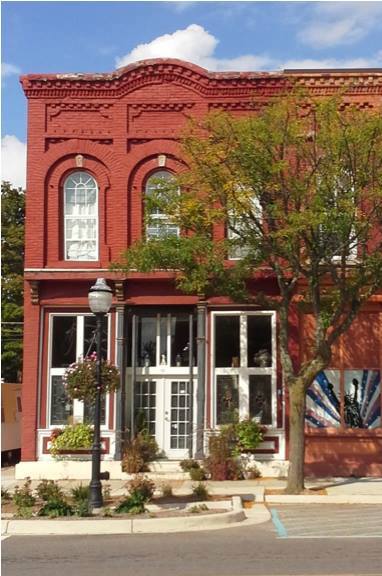
The Building, 1891
There are buildings that simply stand…
and then there are buildings that remember.
Mine was built in 1891, in the quiet rhythm of a growing American town; when Main Streets were the heartbeat of everyday life, and brick was laid not just for structure, but for permanence.
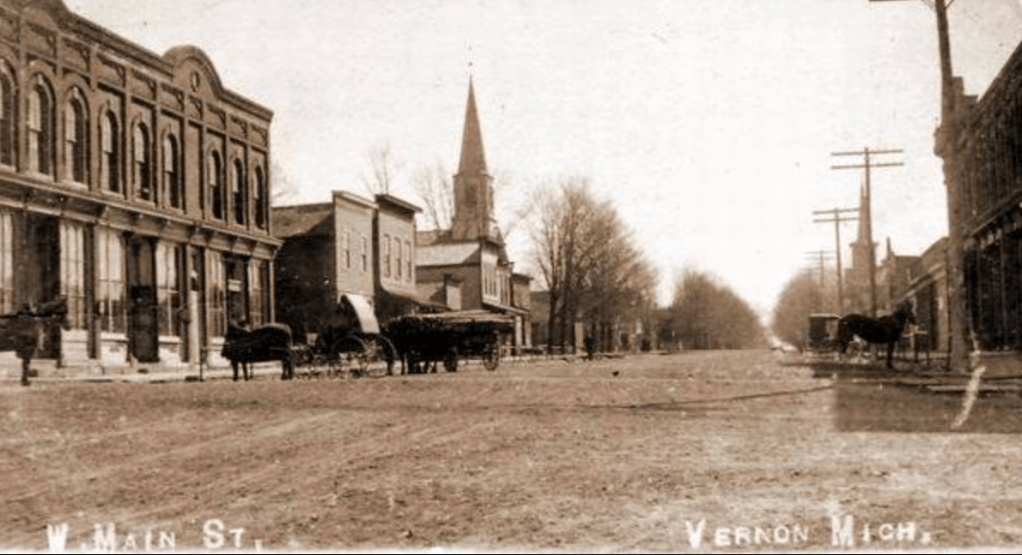
In its earliest days, this building was home to a furniture maker and undertaking firm; a pairing that feels almost poetic now. It was a place where things were made by hand, where craftsmanship mattered, and where life and death both passed gently through the same doors. Chairs, tables, coffins; objects built with care, meant to serve, to hold, to carry.
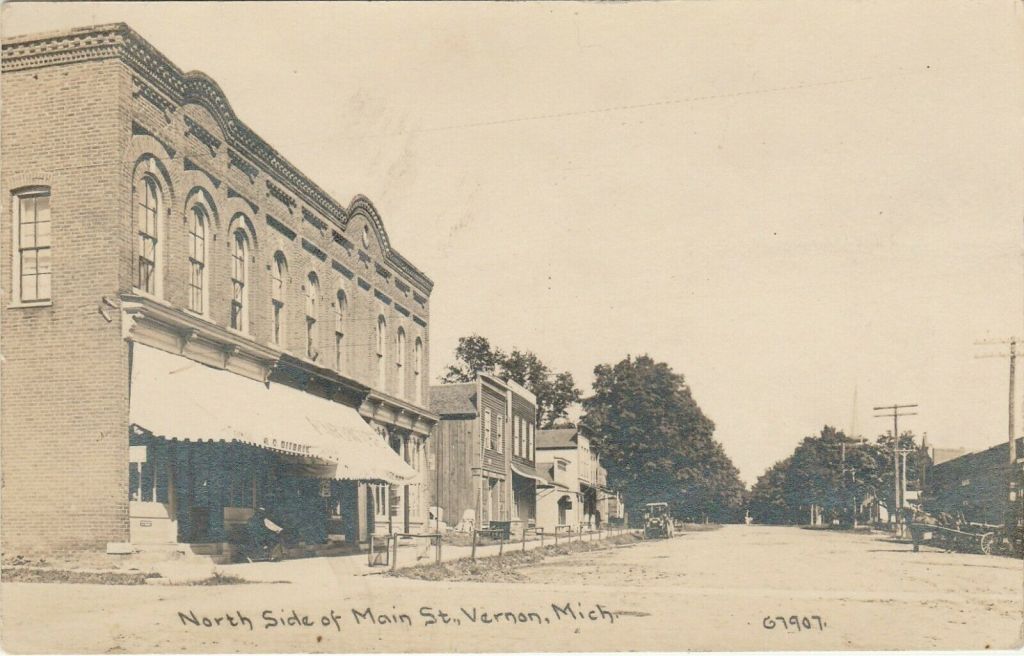
Over the decades, the space evolved as the town did. It became a print shop, where ink and paper carried local stories. A café, where voices gathered and lingered over coffee. A hardware store; practical and essential, supplying the tools that kept homes and lives running. And surely, there were other chapters; ones no longer recorded, but still somehow present in the walls.
Because buildings like this don’t forget.
A Life Within These Walls
In 2018, this building became ours.
After fifteen years in New Mexico, my husband and I found our way back to Michigan; and somehow, in the most modern and unlikely way, we purchased an 1891 Main Street building online.
It felt equal parts impractical and inevitable.
We hadn’t yet stood inside it.
Hadn’t touched the brick or heard how the floors creaked underfoot.
But we knew.
There was something about it that called us home.
Together, we began building a life here. The first floor became our shop; a space shaped by our shared love of craftsmanship, where leather, paper, and quiet intention came together in the form of handmade goods. Upstairs became our home; layered slowly with books, light, and the rhythm of everyday living.
This building has held my life ever since.
It has been both witness and refuge; through seasons of creating, becoming, and eventually, learning how to carry loss.
A Living Piece of Main Street History
Historic brick buildings like mine were once the backbone of small-town America. Built during the late 19th and early 20th centuries, they were designed to last; not just structurally, but culturally.
Their thick masonry walls, tall storefront windows, and often-hidden upper apartments created spaces that were both functional and deeply human. Businesses thrived on the ground floor, while life unfolded above; families, workers, owners, all living within the same structure that sustained them.
These buildings were never meant to be temporary.
They were built with the assumption that they would outlive their makers.
And many have.
But not all.
Across the country, historic Main Streets have slowly disappeared; lost to neglect, modernization without memory, or the simple passage of time. When one of these buildings is lost, it is not just brick and mortar that disappears. It is a story. A record. A physical connection to the people who came before us.
Why Preservation Matters
To preserve a building like this is to choose continuity over convenience.
It is to believe that craftsmanship still matters.
That history is not something confined to books, but something we can touch, walk through, and live inside.
Preservation is not about freezing a building in time; it is about allowing it to continue evolving, while honoring what it has been. It is about holding space for the past while making room for the present.
When we restore rather than replace, we say:
This mattered.
This still matters.
And maybe most importantly:
this will matter to someone after us.
What It Holds Now
Today, the building continues its story.
The first floor is home to Atelier 1891; my leather and stationery studio, a continuation of the work that once filled this space with the sounds of making.
Above it, I am still building a life.
Restoring not just rooms, but a sense of home.
Learning how to live again within walls that have already held so much.
This building has seen generations come and go. It has adapted, endured, and remained.
Now, I am simply its next steward.
And I intend to care for it the way it has quietly cared for everyone before me.

One Room Challenge- Spring 2026 – Living Room
- Week 1- The Living Room Plan
- Week 2- When Things Don’t Go As Planned
- Week 3
- Week 4
- Week 5
- Week 6
- Week 7
- Week 8

