
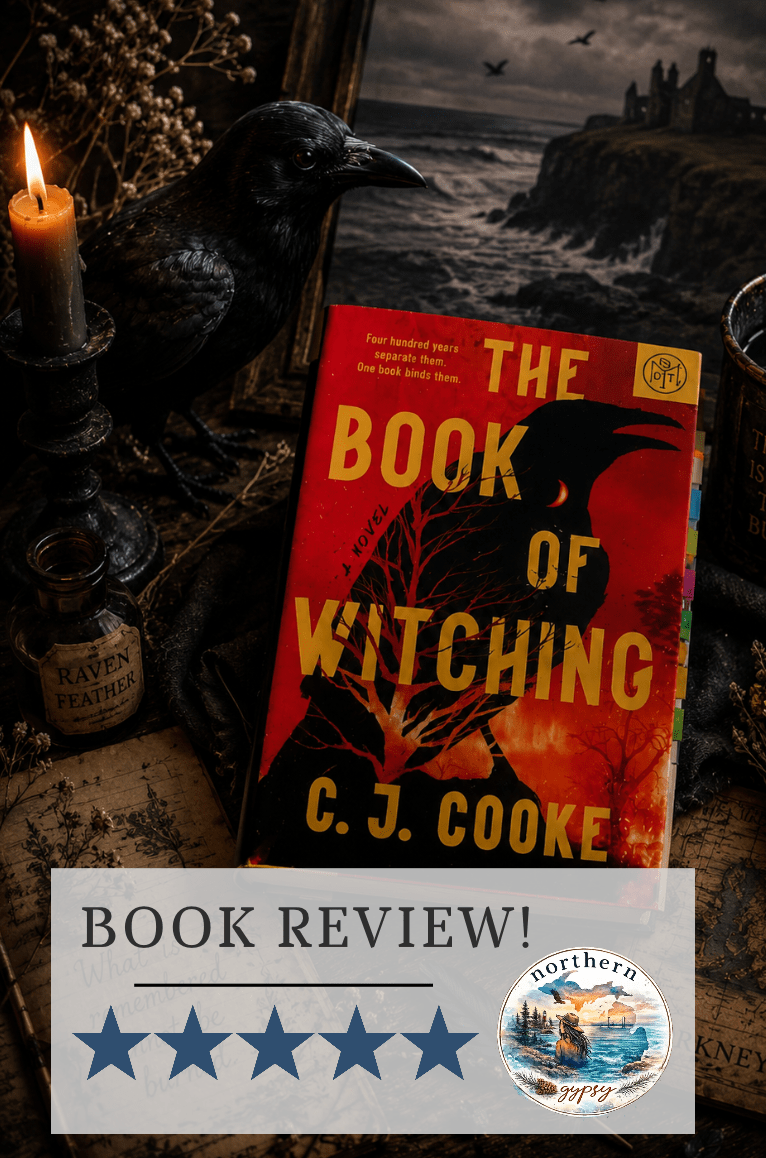
There are books that entertain, books that surprise, and books that completely consume your thoughts long after you’ve closed the cover.
The Book of Witching by C.J. Cooke falls firmly into the last category.
When I pulled this one from my shelf, I expected a solid gothic read. In fact, I originally predicted it would be a four-star book for me. I love gothic fiction, folklore, haunted landscapes, and stories about women connected to ancient mysteries, but sometimes books with all the right ingredients don’t quite come together.
I could not have been more wrong.
By the time I turned the final page, I was left wondering why it had taken me so long to read it. This quickly became one of my favorite gothic novels in recent memory and earned a full five enthusiastic stars.
A Story Steeped in Atmosphere
Set against the windswept landscapes of Orkney, The Book of Witching blends historical fiction, folklore, gothic horror, and family drama into a beautifully layered story.
From the very first chapter, the setting feels alive.
The sea crashes against ancient shores. Ravens circle overhead. Old stories linger in the air like smoke. Every page carries a sense of dread and wonder, as if the land itself remembers what happened centuries ago.
This is exactly the kind of atmosphere I hope for when I pick up a gothic novel.
If you love:
- remote islands
- witchcraft and folklore
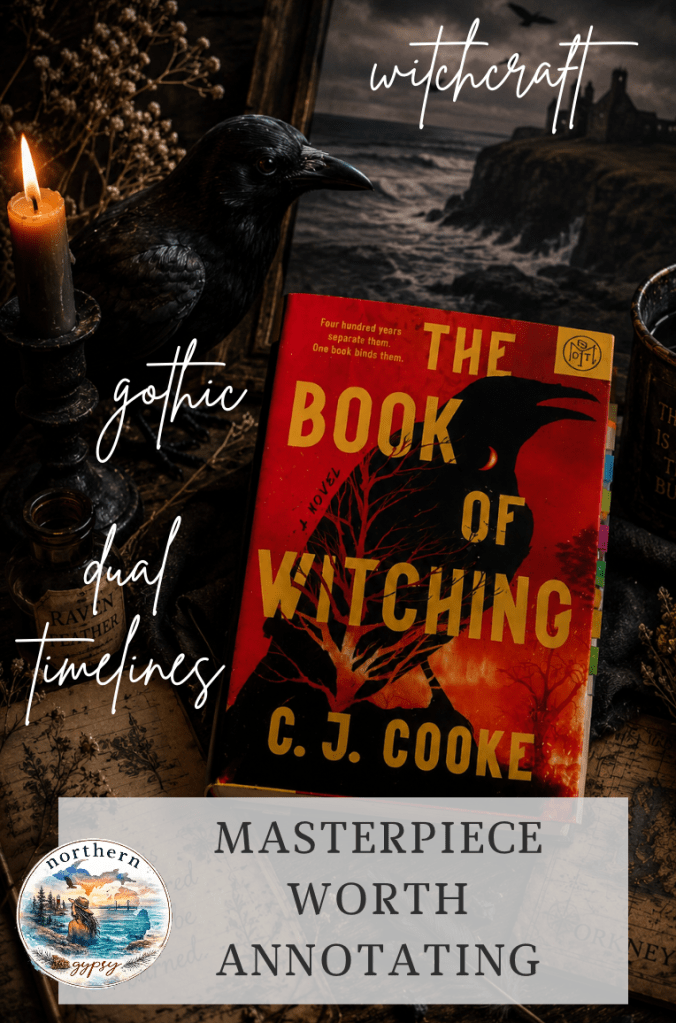
- dual timelines
- family secrets
- stories where the past refuses to stay buried
you need this book on your reading list.
More Than a Story About Witches
What surprised me most was how much emotional depth existed beneath the supernatural elements.
At its heart, The Book of Witching is a story about mothers and daughters, inherited trauma, memory, identity, and the stories we carry through generations.
The novel asks difficult questions:
- How much of who we are comes from those who came before us?
- Can we ever truly escape family history?
- Is our path determined by fate, or do we have the power to choose differently?
- What happens when old wounds are never allowed to heal?
The witchcraft serves as a framework for exploring these themes, but the emotional heart of the story is deeply human.
Why This Book Became an Annotation Dream
One of my favorite parts of reading The Book of Witching was annotating it.
The deeper I got into the story, the more recurring symbols and themes began appearing. It became the kind of book that rewards close reading and invites you to slow down and pay attention.
Throughout my reading, I tracked:
Quotes & Personal Reflections
Beautiful passages, memorable lines, and moments that made me stop and think.
Trauma & Family
The novel is rich with themes of generational trauma, inherited fears, family expectations, and the complicated relationships between mothers and daughters.
Fate vs. Free Will
One of the strongest themes in the book.
Are the characters making their own choices, or are they repeating cycles established generations before them?
Historical Notes & Folklore
The historical sections fascinated me. I found myself constantly looking up references to witch trials, folk traditions, and Scottish folklore.
Symbols I Found Myself Tracking
As the story unfolded, several symbols repeatedly appeared.
Ravens
For me, the ravens came to symbolize memory, fate, and ancestral truth.
Every time they appeared, it felt as though the past was watching.
Fire
Fire represents destruction, transformation, female rage, punishment, and rebirth.
It becomes one of the most powerful symbols in the novel.
Water & The Sea
The sea feels ancient in this story.
Water often symbolizes memory, intuition, emotional inheritance, and the pull of the past.
Thresholds
Doors, shorelines, windows, crossings, and liminal spaces appear throughout the novel.
The characters are constantly standing between worlds:
- past and present
- self and ancestor
- fate and choice
- history and memory
Once I started noticing threshold imagery, I saw it everywhere.
The Historical Timeline
The historical chapters were some of my favorite parts of the book.
Rather than focusing solely on witchcraft, these sections explore how women throughout history have been punished for possessing knowledge, independence, intuition, and power.
The result is heartbreaking, infuriating, and incredibly relevant.
The novel does an excellent job illustrating how fear can turn communities against women and how stories become distorted over time.
Why I Loved It
What ultimately made this a five-star read wasn’t the folklore, the mystery, or even the gothic atmosphere.
It was the emotion.
The grief.
The love.
The sacrifices women make for one another.
The ways stories, memories, and wounds travel through generations.
Beneath all the witchcraft and folklore is a story about women carrying centuries of memory, pain, resilience, and hope.
That is what stayed with me long after I finished reading.
Final Thoughts
The Book of Witching is haunting, atmospheric, intelligent, and emotionally rich.
It is the perfect blend of gothic fiction, folklore, historical mystery, and family drama.
It’s also one of the most rewarding books I’ve annotated in a long time.
If you’re looking for a beautifully written gothic novel filled with ravens, folklore, witchcraft, ancestral memory, and unforgettable atmosphere, I cannot recommend this one enough.
⭐⭐⭐⭐⭐
Five enthusiastic stars.
 About Mandy
Leave a comment