
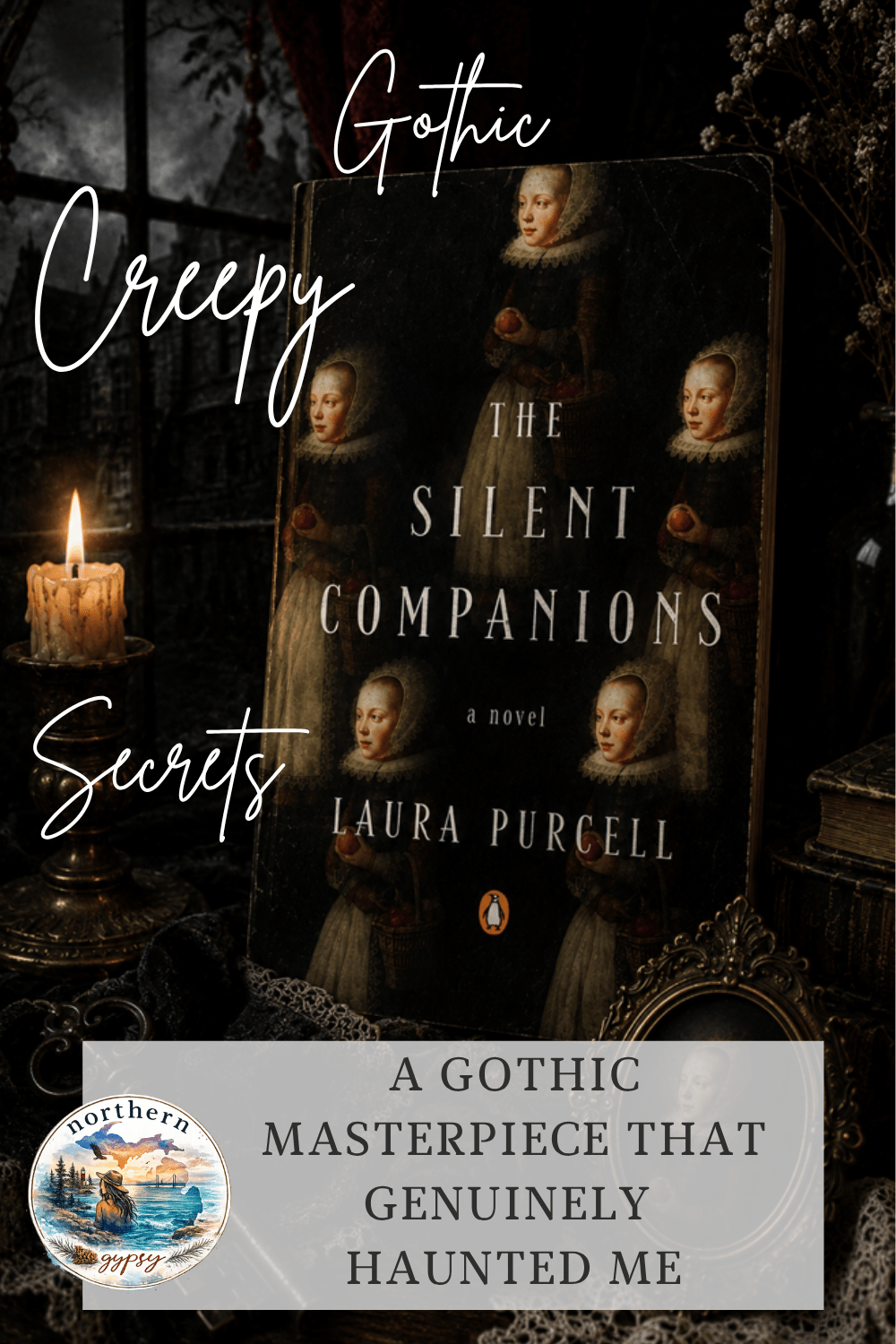
⭐⭐⭐⭐⭐ 5/5 Stars
There are gothic novels that are simply set in old houses, and then there are gothic novels that make the house feel alive.
The Silent Companions is firmly in the second category.
Laura Purcell doesn’t rely on jump scares or excessive gore. Instead, she slowly tightens the tension until every creaking floorboard, every shadow in a hallway, and every glance toward a dark corner leaves you questioning what is real. By the final chapters, I found myself looking over my shoulder whenever I heard a noise in my own house.
That doesn’t happen often.
Plot
Newly widowed Elsie Bainbridge expected marriage to bring security, wealth, and a comfortable future. Instead, only weeks after her wedding, her husband dies unexpectedly, leaving her pregnant and alone.
She is sent to her late husband’s crumbling country estate, The Bridge.
Nothing about The Bridge feels welcoming.
The servants are resentful.
The villagers openly distrust her.
Even the house itself seems to be holding its breath.
Then a locked room is opened.
Inside stands a painted wooden figure, a Silent Companion, that looks exactly like Elsie.
Not similar.
Not vaguely familiar.
Exactly like her.
Everyone in the house is terrified of it.
Elsie dismisses their fears as superstition…
until the figure begins watching her.
A Slow Burn Worth Every Page
Readers looking for immediate scares may find the opening chapters slower than expected. Laura Purcell takes her time building atmosphere, introducing the decaying estate, hostile villagers, and uneasy relationships before allowing the horror to fully emerge.
For me, that deliberate pacing is exactly what made the story work.
The dread builds so naturally that by the time truly unsettling things begin happening, you’re already completely immersed in the world.
Every chapter ratchets the tension higher until the novel becomes almost impossible to put down.
Multiple Timelines That Deepen the Mystery
The novel unfolds through several timelines.
One follows Elsie imprisoned in an asylum, recounting the terrifying events that led to her confinement.
Another follows her arrival at The Bridge in 1865.
A third reaches back to the seventeenth century, gradually revealing the horrifying origins of the Silent Companions.
Normally, multiple timelines can feel distracting, but here they weave together beautifully. Each revelation answers one question while creating two more, making the mystery increasingly compelling without ever becoming confusing.
An Unlikable Heroine… in the Best Way
Elsie isn’t especially likable.
She’s proud.
Judgmental.
Often selfish.
Yet she also feels believable as a Victorian woman suddenly stripped of every certainty she thought marriage would provide.
I didn’t always agree with her decisions, but I never stopped worrying about her.
Watching her slowly question her own sanity while the supernatural closes in made for an incredibly compelling character journey.
Gothic Horror at Its Finest
This novel contains everything I love about classic gothic fiction:
- decaying English manor houses
- family secrets
- unsettling folklore
- eerie diaries
- isolated settings
- psychological uncertainty
- ghostly apparitions
- oppressive atmosphere
And then there are the Silent Companions themselves.
Painted wooden figures shouldn’t be frightening.
Yet somehow these lifeless objects become some of the most disturbing antagonists I’ve encountered in gothic fiction.
Their quiet, motionless presence is infinitely more terrifying than many traditional ghosts.
Even now, I don’t think I’ll ever look at antique wooden cutouts quite the same way again.
Final Thoughts
This is one of those rare horror novels that lingers long after the final page.
Laura Purcell masterfully blends psychological suspense with traditional gothic storytelling, creating an atmosphere so immersive that I genuinely found myself startled by ordinary sounds around my house while reading.
If you love haunted mansions, Victorian ghost stories, slow-burning dread, and beautifully written gothic fiction, The Silent Companions deserves a place at the top of your reading list.
It’s haunting.
It’s unsettling.
It’s brilliantly atmospheric.
And it’s one of the finest gothic horror novels I’ve read.
My Rating
⭐⭐⭐⭐⭐ 5/5 Stars
Perfect for readers who enjoy:
- Gothic horror
- Haunted houses
- Victorian fiction
- Psychological suspense
- Ghost stories
- Dark historical fiction
- Slow-burn supernatural mysteries
🖋️ Annotation Guide for The Silent Companions
If you’re the type of reader who loves filling your books with tabs and notes, The Silent Companions is a dream to annotate. Laura Purcell layers gothic atmosphere, symbolism, social commentary, and psychological horror throughout the novel, making it a rewarding reread as well.
Here’s what I tracked while reading:
🕯️ Gothic Elements
Tab every classic gothic trope:
- Decaying architecture
- Isolated country estate
- Locked rooms
- Ghostly apparitions
- Diaries and hidden histories
- Storms, darkness, and oppressive settings
- Family secrets
- Madness vs. reality
👒 Women’s Roles
Notice the expectations placed upon Victorian women.
Consider:
- Widowhood
- Pregnancy
- Marriage as security
- Reputation
- Female obedience
- Lack of independence
- Motherhood
👤 Character Development
Track how each major character changes or refuses to change.
Pay special attention to:
- Elsie
- Sarah
- Rupert’s family
- The servants
- The villagers
🎩 Class & Social Status
Class differences influence nearly every interaction.
Annotate moments involving:
- Servant/master relationships
- Social expectations
- Wealth vs. poverty
- Old family names
- Outsiders vs. insiders
- Respectability
💬 Favorite Quotes & Personal Thoughts
Mark:
- Beautiful descriptions
- Creepy passages
- Memorable dialogue
- Predictions
- Questions
- Emotional reactions
👁️ Supernatural vs. Reality
One of the novel’s biggest questions is whether the horror is supernatural or psychological.
Track evidence for both possibilities:
- Ghostly experiences
- Hallucinations?
- Coincidences
- Witness accounts
- Mental illness
- Folklore
🔥 Symbolism: Fire
Fire appears repeatedly throughout the novel.
Consider what it represents:
- Purification
- Destruction
- Fear
- Protection
- Judgment
- Transformation
🏚️ Symbolism: The Bridge
The estate itself is far more than a setting.
Annotate references to:
- Decay
- Isolation
- Family legacy
- Secrets
- Entrapment
- Memory
- Generational trauma
🧸 Children
Children play an unexpectedly significant role in the story.
Notice themes involving:
- Innocence
- Vulnerability
- Inheritance
- Family expectations
- Protection
- Loss
🧠 Trauma & Mental Health
The asylum framing naturally raises questions about trauma and sanity.
Track:
- Grief
- Isolation
- Gaslighting
- Fear
- Anxiety
- Hallucinations
- Memory
- Psychological deterioration
📚 Bonus Annotation Ideas
If you really love deep annotation, consider adding tabs for:
- 🕰️ Past vs. Present – Compare the 1635 and 1865 timelines.
- 📖 Secrets & Hidden Truths – Every revelation, diary entry, or concealed room.
- 🪞 Doubles & Reflections – Mirrors, lookalikes, identity, and the uncanny.
- 🌳 Folklore & Superstition – Local legends, beliefs, and how they shape the story.
- 🕯️ Light vs. Darkness – Moments where light offers safety—or fails to.
- ⚖️ Power & Control – Who holds power, and how quickly it shifts.
📌 My Annotation Key
🕯️ Gothic Elements
👒 Women’s Roles
👤 Character Development
🎩 Class & Social Status
💬 Quotes & Personal Thoughts
👁️ Supernatural vs. Reality
🔥 Fire Symbolism
🏚️ The Bridge Symbolism
🧸 Children
🧠 Trauma & Mental Health
The Silent Companions is the kind of gothic novel that rewards careful reading. Nearly every chapter contains subtle clues, recurring symbols, and unsettling details that become even more meaningful once the mystery unfolds. If you enjoy annotating your books, don’t be surprised if you reach for far more tabs than you expected.


Leave a comment